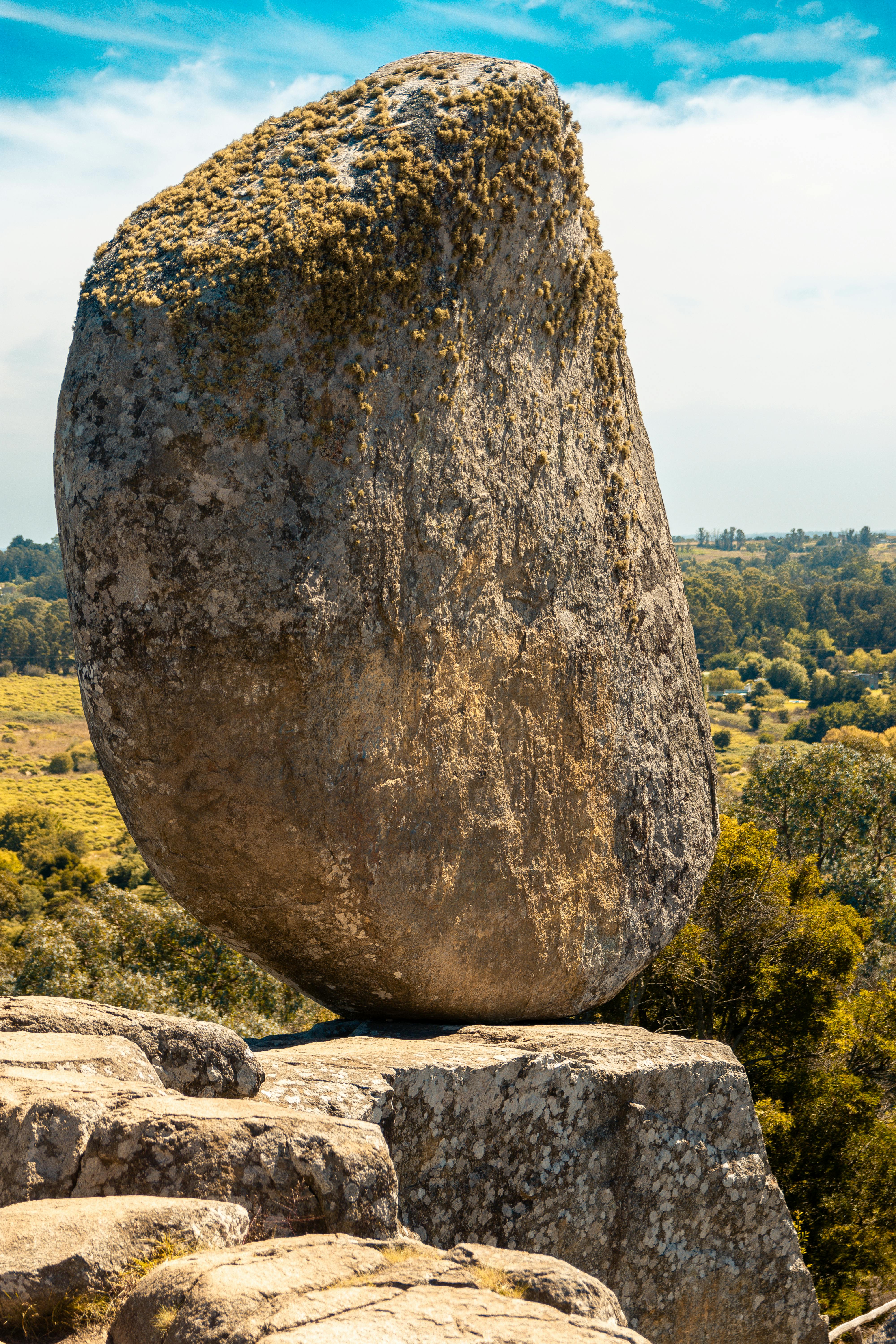
Stones?
The stone receives its being. It does not need to fight for what it is: it suffices to be there, to occupy a place in the meadow, to endure without effort. Man, by contrast, receives nothing settled. He is granted the abstract possibility of existing, but concrete reality—the form of that existence—he must wrest from the world hour after hour. Ortega put it with a precision that works less as aphorism than as diagnosis: man must earn his living, not only economically, but also metaphysically.
If one takes that sentence seriously, it forces a view of human life as a task that does not end with producing income. Earning a living metaphysically means winning form: sustaining a project, choosing a direction, producing continuity where, by default, there would be dispersion. No one is born with a sealed being. What we call identity, character, craft—these are not initial data: they are the results of a slow fabrication, made of sustained decisions and overcome resistances.
For a long time, work served as a name—imperfect, but useful—for that conquest. Not because work guarantees meaning, but because it introduces something meaning often requires: friction, rhythm, delay, prolonged effort. Friction forces one to concentrate energy on something that resists, and that resistance, however unromantic it sounds, is one of the ways character and competence are forged. The carpenter does not only produce furniture: in making it, he produces a version of himself that did not exist before. The surgeon does not only operate: she becomes a surgeon by operating. The activity configures the agent.
Today, however, the question returns at a different scale. Not only because of work in the abstract, but because of the kind of technique now entering the scene.
In Ortega’s thought, circumstance is not a backdrop. It is the very material of life: the set of facilities and difficulties in which one finds oneself thrown and with which one must negotiate in order to exist. We do not choose it; we inhabit it. But human life does not merely endure it: it attempts to reorganize it.
Technique operates, within that framework, as a condition of possibility. It is not an instrumental add-on or a gadget: it is the way in which a life-program becomes practicable, the reform of circumstance so that the imagined life does not remain a mere idea. That is why technique, as it advances, does not only change what we do, but the very form of being in the world.
Ortega adds a particularly fertile observation: technique produces the superfluous. Not in the moral sense of caprice, but as that which exceeds biological necessity and yet defines civilization: culture, institutions, style, available time, a certain idea of well-being. Technique—he writes—is the effort to save effort. And the space left by the saved effort does not remain empty: it is used to invent life.
That formula has two faces. On one side, it is optimistic: relieving necessity opens room to live beyond the merely animal. On the other, it is demanding: saving effort does not resolve life; it exposes it. It leaves a hollow and, with it, an obligation: deciding what to do with the freedom technique makes possible.
Artificial intelligence alters the scale of that equation because it does not only fabricate objects or conveniences: it fabricates, at low cost, symbolic forms. Text, images, music, narratives, arguments, suggested decisions: the materials through which a society explains itself, persuades itself, entertains itself, and governs itself. AI multiplies the superfluous precisely where much of modern experience now takes place: in the mass production of content, interpretation, and available meaning.
The risk, then, is not scarcity but excess. Not the lack of stimulus, but the possibility of a life continuously occupied and yet poorly oriented. Because if AI multiplies symbolic superfluity, it also multiplies the available horizons: many versions of what is possible, many narratives of what matters, many pre-drawn routes for attention. And abundance does not guarantee freedom. It can also produce dispersion.
If human life consists in making oneself within a circumstance, it is not enough to have possibilities: one needs a program that selects, ranks, and sustains. Otherwise, being-able-to-be becomes perpetual fluctuation that never solidifies into character. Work—in a broad sense, not merely economic—served for a long time as one of the great organizers of that program: it imposed rhythm, demanded persistence, forced energy into something that, by resisting, ended up shaping craft and identity.
If a growing portion of that effort is saved or externalized, the question is not simply which tasks disappear, but what principle of form remains in their place. And here a delicate point emerges: a technique that liberates can open genuine space for invention, but it can also facilitate the delegation of authorship. It would not be replacement that is decisive, but renunciation: that the hollow is filled with what is already given—with what is suggested, preformatted, offered by the age as a menu—rather than with a choice one truly assumes.
This is not about idealizing the past or demonizing automation. Ortega does not write against technique; he writes from the intuition that technique is constitutive of the human. But that constitution has a price: a liberated life does not come with instructions.
The title of these lines is not meant to dramatize. It works as an image at the limit. If the human must earn a living also metaphysically, then an existence with fewer practical demands can be both a triumph and a problem: a triumph if the hollow becomes invention; a problem if the hollow becomes mere consumption of what is already available.
Becoming stones would not mean losing a job. It would be something subtler: inhabiting a circumstance increasingly organized by systems that propose, optimize, and suggest, while personal life becomes less the author of itself. Not by coercion, but by convenience. Not by a lack of options, but by an excess of offerings that spare the trouble of choosing.
Technique can relieve necessity, but it cannot decide what life is worth living. That displacement—from what must I do to what will I do—is not technical: it is existential. And perhaps the contemporary problem is not to resist technique, but to sustain, within a technically facilitated world, the capacity to orient life: to choose ends, to accept costs, to build continuity.
The hollow is not rest. It is a question.